
“Like Sands Through the Hourglass, So Are the Days of Our Lives”
Like sands through the hourglass, so are the days of our lives.” Those familiar words, once heard daily in the


Federal Privacy Law Gives Parents and Students Control Over Education Records
Every parent wants to know what is being written about their child at school. Few, however, realize that federal law gives them the legal right to see those records, request corrections when information is inaccurate, and control much of who has access to their child's personal educational information.
The Family Educational Rights and Privacy Act (FERPA), enacted by Congress in 1974, remains one of the nation's most important education privacy laws. The law applies to virtually every public school, college and university that receives funding from the U.S. Department of Education and establishes clear protections for student education records.
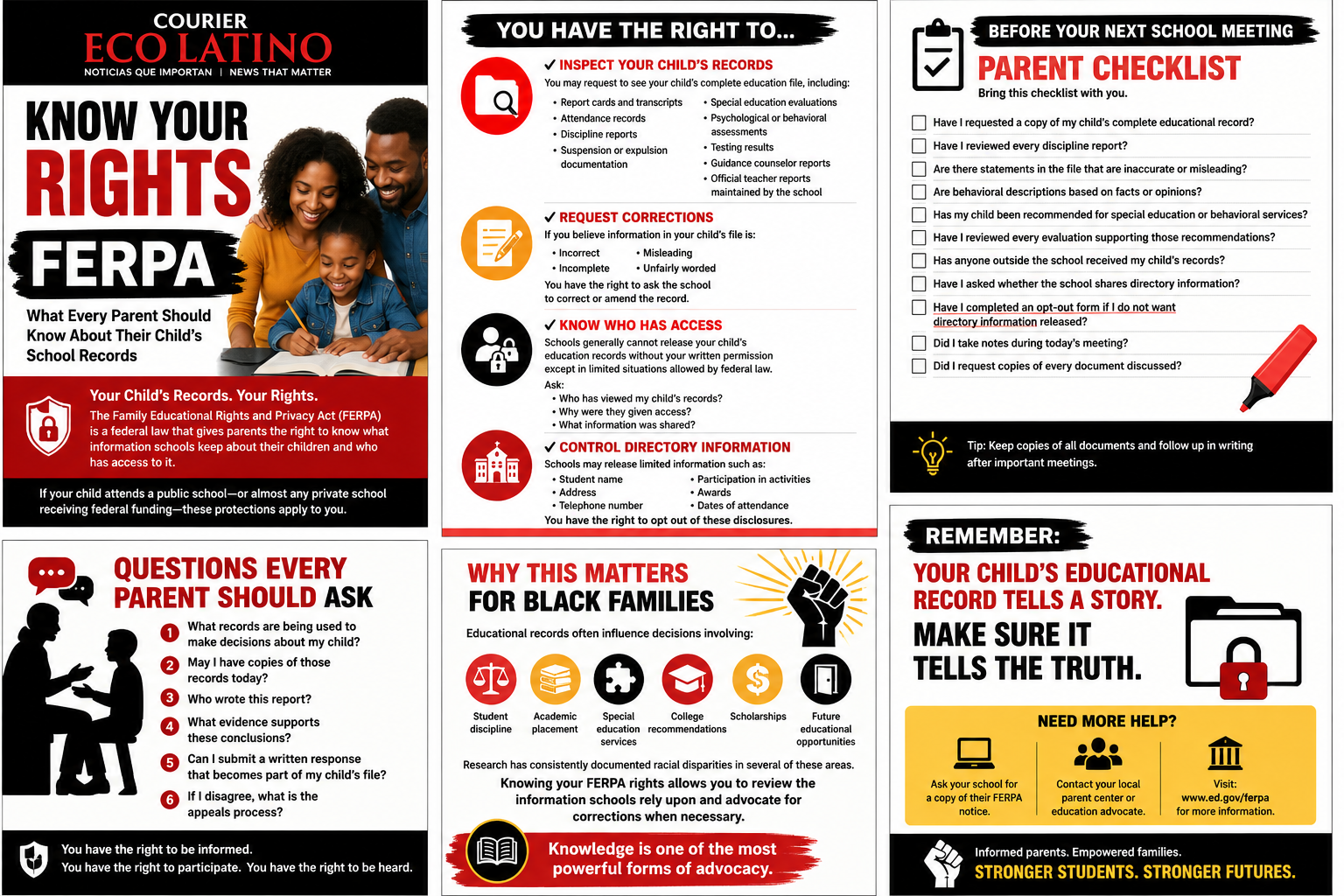
For parents, educators and advocates, FERPA serves as more than a privacy law. It provides families with an important measure of accountability and transparency in the educational system.
What FERPA Does: Under FERPA, parents have the legal right to inspect and review their child's education records maintained by the school. If parents believe information contained in those records is inaccurate, misleading or violates the student's rights, they may request that the school correct or amend the record.
The law also limits who can access a student's educational records. In most circumstances, schools must obtain written consent from a parent before releasing personally identifiable information.
When a student turns 18 years old or enrolls in a college or university, those rights transfer from the parent to the student, who becomes what the law calls an "eligible student."
FERPA does allow several limited exceptions. Schools may disclose records to school officials with a legitimate educational interest, another school where the student is transferring, during certain health or safety emergencies, or when required by a lawful court order.
Schools may also release what is known as directory information, including a student's name, address, telephone number, dates of attendance, participation in school activities and awards received, unless a parent or eligible student chooses to opt out after receiving notice from the school.
Why FERPA Matters for Black Families: While FERPA protects every family, education advocates say it carries particular significance for Black families because educational records often influence decisions that affect a child's future.
Discipline Records: Federal civil rights data have consistently shown that Black students are suspended and expelled at higher rates than their White peers for similar conduct. Those disciplinary records can follow students throughout their academic careers and may influence future educational opportunities.
FERPA gives parents the opportunity to review disciplinary files, identify inaccuracies, question subjective language and request corrections when records do not accurately reflect what occurred.
A single inaccurate notation in a student's file can have lasting consequences. Knowing what is in that file allows families to advocate effectively for their children.
Special Education Classifications: Studies have also documented concerns that some Black students are disproportionately identified for certain special education services or behavioral classifications based on subjective evaluations.
FERPA allows parents to review evaluations, recommendations and documentation supporting those decisions. Families can determine who authored reports, examine the evidence relied upon and challenge classifications they believe are inappropriate or unsupported.
Equal Access to Information: One of FERPA's greatest strengths is that it helps level the playing field between schools and families.
Parents often attend meetings with principals, counselors or district administrators without realizing they have the legal right to review the same records school officials are using to make decisions about their child.
Knowing those rights enables families to participate more effectively in discussions involving academic placement, discipline, special education services and other important educational decisions.
Privacy and Outside Agencies: FERPA also limits when schools may share student information with outside organizations, including law enforcement agencies and other third parties.
Although certain legal exceptions exist, schools generally cannot disclose personally identifiable student information without parental consent or another legal basis.
Understanding those protections allows families to ask informed questions about what information is being shared, why it is being shared and with whom.
Directory Information: Many parents are unaware that schools may release directory information unless they specifically decline.
By exercising their FERPA opt-out rights, families can limit access to student information by military recruiters, marketers and other third parties that request directory information from schools.
A Tool for Accountability: FERPA is enforced by the U.S. Department of Education rather than through private lawsuits. Schools found to be violating the law risk losing federal funding, although the department generally seeks voluntary compliance before imposing sanctions.
For many families, however, the law's greatest value is not in punishment but in prevention.
Educational records create the paper trail behind decisions involving discipline, academic tracking, special education placement and future opportunities. Those are also areas where decades of research have documented persistent racial disparities.
For Black families, understanding FERPA means understanding that they have more than a voice—they have legal rights.
Parents have the right to know what schools are writing about their children, the right to question information they believe is inaccurate, and the right to advocate for corrections before those records influence future opportunities.
In an educational system where documentation often shapes decisions, FERPA gives families one of the most important tools available: the power to see the record, understand the process and hold institutions accountable.