
“Like Sands Through the Hourglass, So Are the Days of Our Lives”
Like sands through the hourglass, so are the days of our lives.” Those familiar words, once heard daily in the


There are moments in history when a nation reveals not only what it believes—but who it is willing to sacrifice. This recent Supreme Court decision, which has effectively dismantled the power of Section 2 of the Voting Rights Act, is one of those moments.
With a 6-3 ruling, the Court has all but closed the door on challenging gerrymandered political maps designed to dilute Black voting strength. In doing so, it has weakened one of the most sacred victories won during the Civil Rights Movement—the hard-fought triumph of 1965, when courageous men and women marched, bled, suffered, and in some cases died so that Black voices could finally be counted in American democracy.
Let us never forget: the Voting Rights Act was not handed to us out of kindness. It was demanded through sacrifice. It was purchased on the Edmund Pettus Bridge with fractured skulls and tear gas. It was purchased in Mississippi with blood in the dirt. It was purchased in Montgomery by weary feet walking instead of riding. It was purchased by ordinary people who made an extraordinary decision—that freedom was worth the cost.
And now, once again, we find ourselves standing at the crossroads of history.
But hear me clearly: the Black community is not taking this lying down. Black congressional leaders, legal scholars, and civil rights advocates are already mobilizing to defend what remains and to push for passage of the John R. Lewis Voting Rights Advancement Act. The goal is simple but necessary: to require states and jurisdictions with a documented history of voter discrimination to once again seek federal approval before changing voting laws.
Why? Because history has taught us something painful: when protections are removed, suppression returns. As one leader so powerfully stated: “We did not become a truly multiracial democracy until the Voting Rights Act of 1965 enforced the Fifteenth Amendment because Black Americans demanded the right to be seen, heard, and counted. That progress was paid for in blood, sacrifice, and unbreakable resolve.”
The question now is not whether our elected leaders will fight. Many already are. The real question is this: What are we willing to do? What about the grassroots? What about the churches? What about the Divine Nine? What about Black civic organizations, community leaders, young activists, and everyday citizens?
How long are we willing to march? How long are we willing to organize?
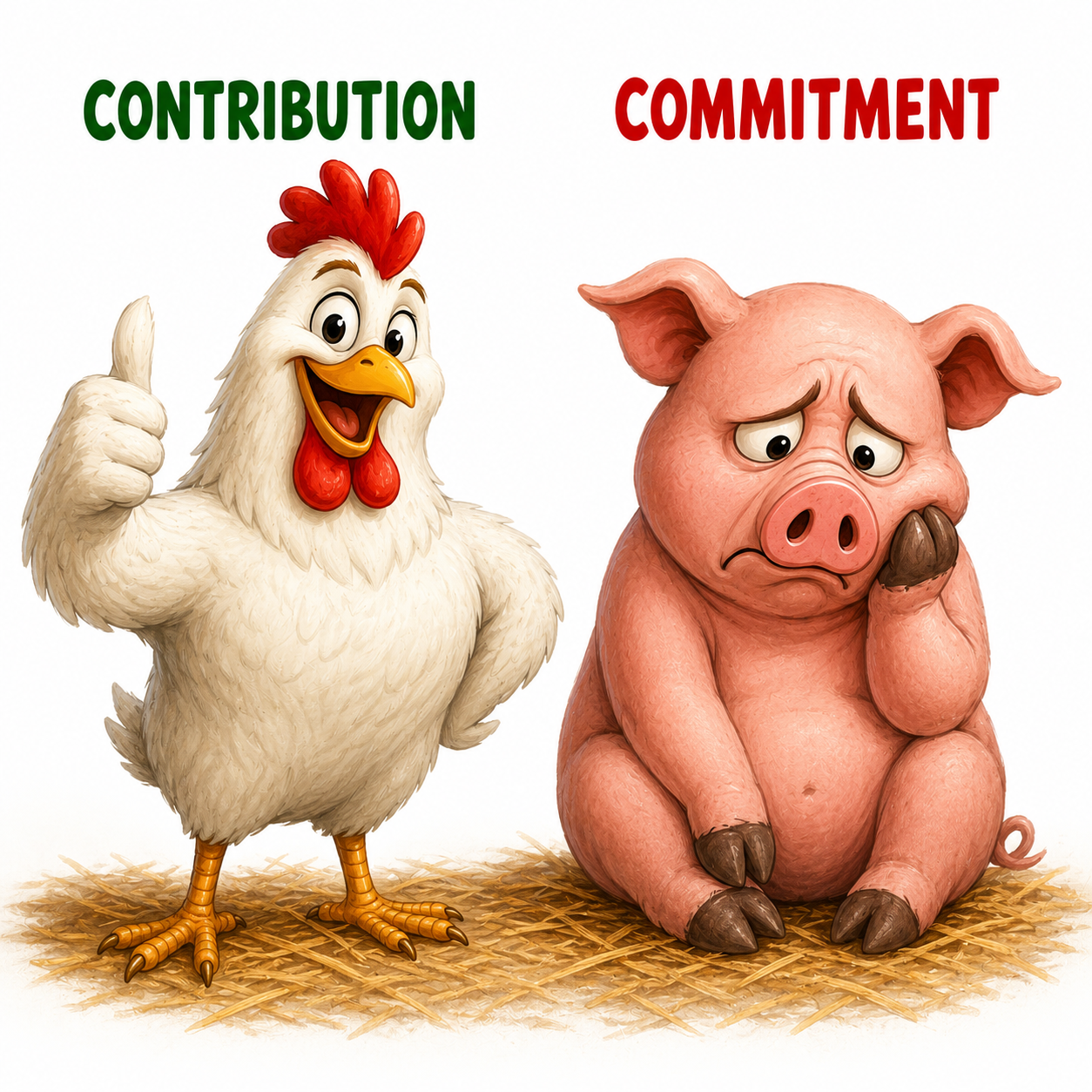
How long are we willing to stay engaged once the cameras leave and the hashtags stop trending? Because history teaches us there is a difference between contribution and commitment.
I’m reminded of the old story about the chicken and the pig walking down the street together. They passed a grocery store with a sign in the window that read: “Bacon and Eggs Desperately Needed.”
The chicken looked at the pig and said, “I’ll give them the eggs if you’ll give them the bacon.”
The pig stopped, looked at the chicken, and replied, “No way.”
The chicken asked, “Why not?”
The pig answered, “Because for you, it’s just a contribution. For me, it’s total commitment.”
And therein lies the problem of our time.
Many people are willing to give an “egg.” We’ll attend a march. Post a quote online. Wear the T-shirt. Make a donation. Show up when it’s convenient.
But commitment is different. Commitment costs something. Commitment means standing when it’s unpopular. Commitment means organizing when you’re tired. Commitment means voting in every election—not just presidential elections. Commitment means teaching our children the history they are trying to erase. Commitment means refusing to surrender our power simply because the fight has become difficult.
It is easy to be brave when there is no danger. But true commitment is revealed when the consequences become real. John Lewis was committed. Dr. Martin Luther King Jr. was committed. Fannie Lou Hamer was committed. The people of Montgomery were committed.
For 381 days—from December 5, 1955, until December 20, 1956—more than 40,000 Black bus riders refused to ride segregated buses. Think about that. Three hundred and eighty-one days of walking, carpooling, sacrificing, enduring threats, insults, and intimidation.
That was not contribution. That was commitment. And now the torch has been placed in our hands. So let me close with a word to our all of us: Do not grow weary. Do not become discouraged. Do not allow cynicism to rob you of your purpose. Keep fighting with courage and conviction in the face of unimaginable challenges. We need your voices, your energy, your vision, and your determination—because this is your time.
As you begin to understand that your vote truly does matter, you must also understand that protest alone is not enough. Protest must create pressure. Pressure must produce policy. And policy must protect people.
That kind of change does not happen overnight. This will not be a one-round fight. But every generation has a moment when history asks: Will you merely contribute—or will you commit?
The future of democracy may very well depend on our answer.
Bottom of Form