
What to Know Before Talking to an Insurance Company After an Accident
By Seth Bader, Founder and CEO of Bader Law Personal Injury Lawyers Within a day or two of a crash,


There is a difference between disagreeing with an elected official and threatening his life.
There is a difference between questioning how taxpayer dollars are spent and questioning whether an elected official deserves the same protection afforded to those who came before him. And there is certainly a difference between political criticism and a death threat. But apparently, here in Columbus, Georgia, we are having difficulty understanding those differences.
As I have watched the controversy surrounding Mayor-elect Isaiah Hugley's request for three vehicles — one for official use and two for security — I have found myself asking a question that I believe many others in this community are asking.
Why is it that when previous mayors requested vehicles and resources necessary to perform their duties, those requests were treated as part of conducting city business, but when Columbus' first elected Black mayor makes a similar request, suddenly we need to debate whether he is asking for too much?
Make it make sense.
And before someone attempts to turn this editorial into an argument about fiscal responsibility, let me be clear: I believe in accountability. I believe in transparency. And I believe taxpayers have every right to know how their money is being spent. But I also believe in consistency.
You cannot have one set of expectations for the mayors who came before Isaiah Hugley and suddenly establish another set of expectations for the first elected Black mayor of Columbus. That is not accountability. That is a double standard.
We are not living in the America of 20 or even 10 years ago. We are living in a country where political disagreements have increasingly become personal attacks, where social media has provided a platform for hatred, where public officials and their families have been threatened, and where political violence is no longer something we can dismiss as unimaginable.
We have witnessed threats against governors, members of Congress, judges, election workers and other public servants. We have seen elected officials targeted because of their political beliefs, their decisions and, yes, their race. And unfortunately, Columbus is not immune to that changing climate.
Since Isaiah Hugley's election, there has been an unmistakable level of hostility directed toward him, particularly on social media. Some of it is legitimate political disagreement. Some of it is disappointment over the election results. But some of it has crossed a line that no community should be willing to accept.
When individuals reportedly suggest that he will not live to see his inauguration, that is not constructive political criticism.
When someone reportedly posts that the mayor-elect "needs to be shot," that is not a discussion about economic development, taxes or city services.
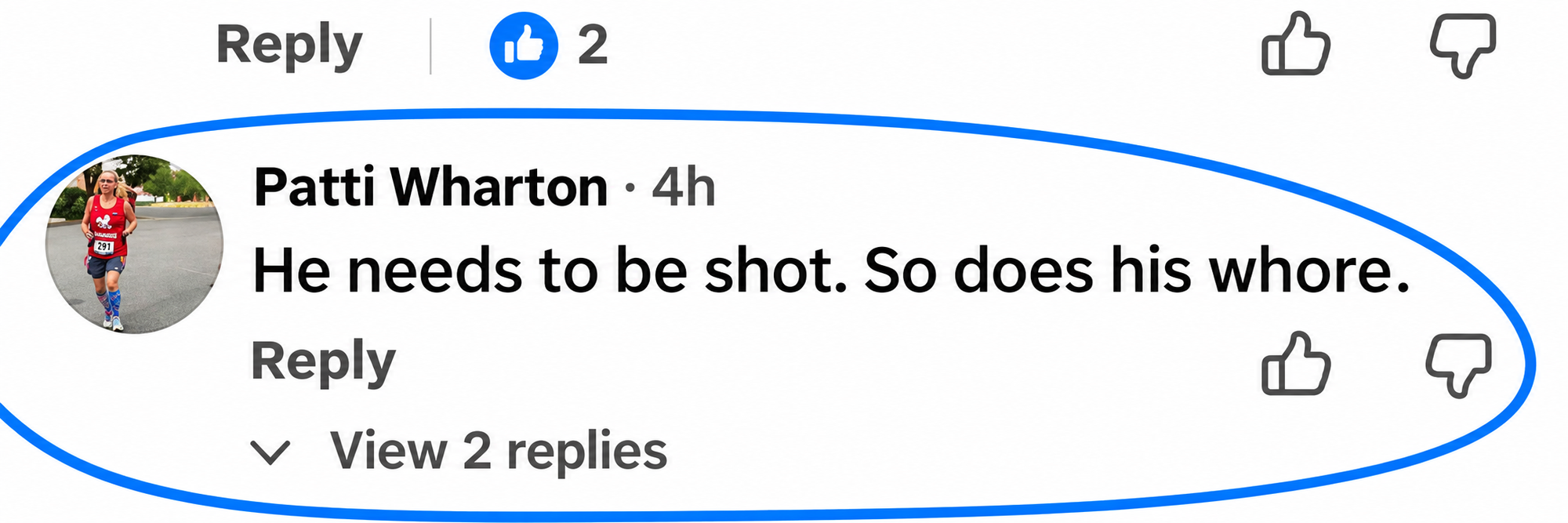
Those are statements that must be taken seriously. And based on information I received, Muscogee County Sheriff's deputies were able to identify the individual connected to the above threatening social media post and responded to that person's residence.
That is an important distinction. We are not simply talking about people disagreeing with Isaiah Hugley. We are talking about reported threats serious enough to prompt a law enforcement response.
How much more evidence of a changing political climate do we need before we acknowledge that protecting an elected official is not a luxury but a responsibility?
There is another important point that seems to have gotten lost in this conversation. Under Columbus' consolidated government structure, the mayor serves as the city's public safety director. That responsibility carries considerable weight.
The mayor is expected to provide leadership in matters involving public safety, coordinate with law enforcement leadership and make decisions affecting the safety and security of this community. Yet somehow, we are suggesting that the individual who will be responsible for helping oversee public safety should not have a meaningful voice in determining the resources necessary for his own protection.
Think about that. We expect the mayor to exercise judgment when it comes to protecting nearly 200,000 residents, but when he exercises that same judgment concerning his own security, some suddenly question whether he knows what he needs.
There is precedent for our mayors who serve as the city's public safety director making decisions and requests concerning their official transportation and security arrangements. Those responsibilities did not suddenly appear with Isaiah Hugley's election.
Of course, the mayor's public safety responsibilities do not eliminate City Council's budgetary authority or applicable purchasing requirements. But there is a difference between exercising legitimate oversight and turning a reasonable security request into a political spectacle.
The question should not be whether Isaiah Hugley has earned the right to feel safe. The question should be why we are making him defend a level of protection that should be considered part of the responsibilities of the office.
During the recent City Council discussion, considerable attention was directed toward whether a formal threat assessment had been completed. Let me say something that may make some people uncomfortable.
I am not opposed to law enforcement evaluating threats. That is part of its responsibility. But I am opposed to making a threat assessment the central argument for delaying or questioning a mayor's request for reasonable security resources.
The need for security does not begin the moment someone completes a report. And the responsibility to protect a public official does not suddenly become legitimate only after someone produces a document.
A threat assessment may help determine specific security procedures, but it should not become a political prerequisite for acknowledging that the mayor of Columbus needs adequate protection.
We already know the political climate in America has changed. We already know that public officials have become targets of threats and violence. And we already know that the mayor-elect has raised serious concerns about his personal safety.
Why must we wait for someone to put on paper what common sense should already tell us?
Security is not simply about responding to an existing threat. It is also about preventing a potential tragedy. That is why responsible governments plan ahead. That is why security professionals prepare for possibilities rather than waiting for emergencies.
And that is why I believe this discussion should be centered on providing the incoming mayor with the resources necessary to perform his duties safely, not on creating additional political hurdles.
At its Nov. 17 meeting, Columbus City Council considered a request for three 2027 Chevrolet Tahoes at a cost of $63,400 each, totaling $190,200. One vehicle was intended for the mayor's official use, while the other two were designated for security personnel. After considerable discussion, council unanimously approved two vehicles at a total cost of $126,800, leaving the third for further consideration.
Now, let's put that into perspective. The mayor-elect did not request three luxury vehicles for his personal enjoyment. He requested transportation and security resources associated with the office he is preparing to assume.
There is a difference. Furthermore, the funding identified for these purchases is expected to come from money remaining in the 2026 budget, not from new funding requested in the 2027 budget. That distinction matters.
It does not mean the vehicles are free. Taxpayer dollars are still taxpayer dollars, regardless of which fiscal year they come from. But it does mean the public discussion should accurately reflect the source of the proposed funding rather than create the impression that the incoming mayor is demanding new money at the expense of next year's priorities.
And let me ask another question.
How many times have we watched City Council approve expenditures for equipment, vehicles, projects and other government operations without the level of public controversy that has surrounded this particular request? I am not suggesting those expenditures should escape scrutiny. I am suggesting that scrutiny should be applied fairly.
If three vehicles are considered excessive today, then show us where the same standard was applied to previous administrations. Show us the comparable discussions. Show us the objections.
Show us when previous mayors were required to publicly justify their transportation and security needs under the same level of scrutiny. Because if those standards did not exist before, we deserve to know why they have suddenly become so important now.
I have lived in Columbus long enough, worked in this community long enough and observed local politics long enough to recognize when a conversation has dimensions that people are reluctant to acknowledge.
And this is one of those conversations.
As Councilors Bruce Huff and Simi Barnes both suggested, the negative comments, misinformation and disrespect directed toward the mayor-elect have contributed to the hostile environment surrounding his transition into office. But I believe we need to go a little further.
For years, Isaiah Hugley faced criticism as Columbus' Black city manager. But some of it carried a level of personal hostility that went far beyond disagreements about government policy. Now, after the voters of Columbus have elected him mayor, that hostility has not disappeared. In some circles, it has intensified.
And when public officials engage in personal attacks, inflammatory rhetoric or repeated efforts to undermine the legitimacy of an elected leader, they should not be surprised when that language encourages even more hostility among those already angry about the election results.
That does not mean every councilor who disagrees with Hugley is responsible for threats made by others. Nor does it mean everyone who questions the purchase of three vehicles is racist.
But it does mean that elected officials have a responsibility to recognize the influence of their words and the environment those words can help create. And it means we cannot ignore the racial dimension of a controversy involving Columbus' first elected Black mayor.
For generations, Black Americans fought for the right to vote, the right to hold public office and the right to lead communities that once denied them those opportunities.
Now, in 2026, Columbus has elected its first Black mayor through the ballot box. And before he can even take the oath of office, we are debating whether his request for security resources is excessive.
I am not asking that Isaiah Hugley receive special treatment because he is Black. I am demanding that he receive equal treatment because he is the mayor-elect. There is a difference. And that difference matters.
One of the most troubling aspects of this controversy is the suggestion that the mayor-elect must somehow prove that his safety concerns are legitimate before his request can be taken seriously.
Since when did protecting the chief elected official of a city become something that depends on whether everyone agrees with his personal assessment of danger?
We do not expect firefighters to wait until a building is completely engulfed in flames before preparing their equipment. We do not expect police officers to wait until a crime has been committed before taking preventive measures.
And we should not expect a mayor to wait until someone acts on a threat before reasonable security arrangements are put in place.
There is also a practical reality that deserves attention. The mayor of Columbus attends public meetings, community celebrations, religious services, neighborhood events and countless other activities where he is accessible to residents.
That accessibility is one of the strengths of local government. But in today's political climate, accessibility can also create vulnerability. The goal of security is not to isolate the mayor from the people he serves. It is to make certain he can continue serving those people without unnecessarily exposing himself, his family or others to danger.
Protection is not a privilege reserved for politicians we like. It is a responsibility attached to the offices they hold.
In a matter of weeks, Isaiah Hugley will take the oath of office as the 71st mayor of Columbus, Georgia. He will become the mayor of every resident of this city. Those who voted for him. Those who voted against him. And those who did not vote at all.
He will inherit the responsibilities, expectations and challenges that come with leading this community. And he should also inherit the same institutional respect, resources and consideration afforded to those who occupied that office before him.
We cannot claim to celebrate progress while continuing to question whether the people who represent that progress deserve equal treatment.
We cannot celebrate the historic election of Columbus' first Black mayor on one hand and then subject him to a different standard of scrutiny on the other.
And we certainly cannot ignore the reality of political threats while pretending that this is simply a disagreement over three Chevrolet Tahoes.
I recognize that $190,200 is a substantial amount of money. But I also recognize that the life of a mayor, the stability of city government and the safety of those responsible for protecting our elected leadership cannot be reduced to a price tag.
There are legitimate questions about how government spends money. Those questions should always be asked.
But there is something fundamentally wrong when a discussion about protecting an elected official becomes more contentious than the threatening behavior that made additional security a concern in the first place.
And there is something equally troubling when requests that have historically been treated as part of government operations suddenly become controversial under a new administration.
So I return to the question with which I began.
When previous mayors needed vehicles and security resources, where was this level of outrage? When previous administrations made requests involving official transportation, where were the demands that they first prove their need to the satisfaction of every council member?
And why, now that Columbus has elected its first Black mayor, are we having a conversation that makes it appear as though he is asking for something extraordinary?
Make it make sense.
Because from where I sit, the issue is not simply three vehicles. It is about consistency. It is about respect for the office. It is about acknowledging the dangerous political climate in which we now live.
And, whether some want to admit it or not, it is also about ensuring that the first elected Black mayor of Columbus is not held to a standard different from those who came before him.
Isaiah Hugley should not have to wait until a threat becomes a tragedy before the city takes his security concerns seriously. Nor should he have to apologize for wanting to return home safely to his family after a day of serving the citizens of Columbus.
The citizens have spoken through their votes. They have entrusted Isaiah Hugley with the leadership of this city. Now it is time for the city to provide him with the tools, resources and protection necessary to do the job.
Not because he is Black. Not because he is Isaiah Hugley. But because he is the duly elected mayor of Columbus, Georgia.
And if that standard was good enough for those who came before him, it ought to be good enough for him. Anything less is not fiscal responsibility. It is unequal treatment.
And Columbus deserves better.