
View From A Pew: If They’re Talking, You’re Moving
Let me help somebody this morning. You’re getting mad because they’re talking about you. Behind your back. On

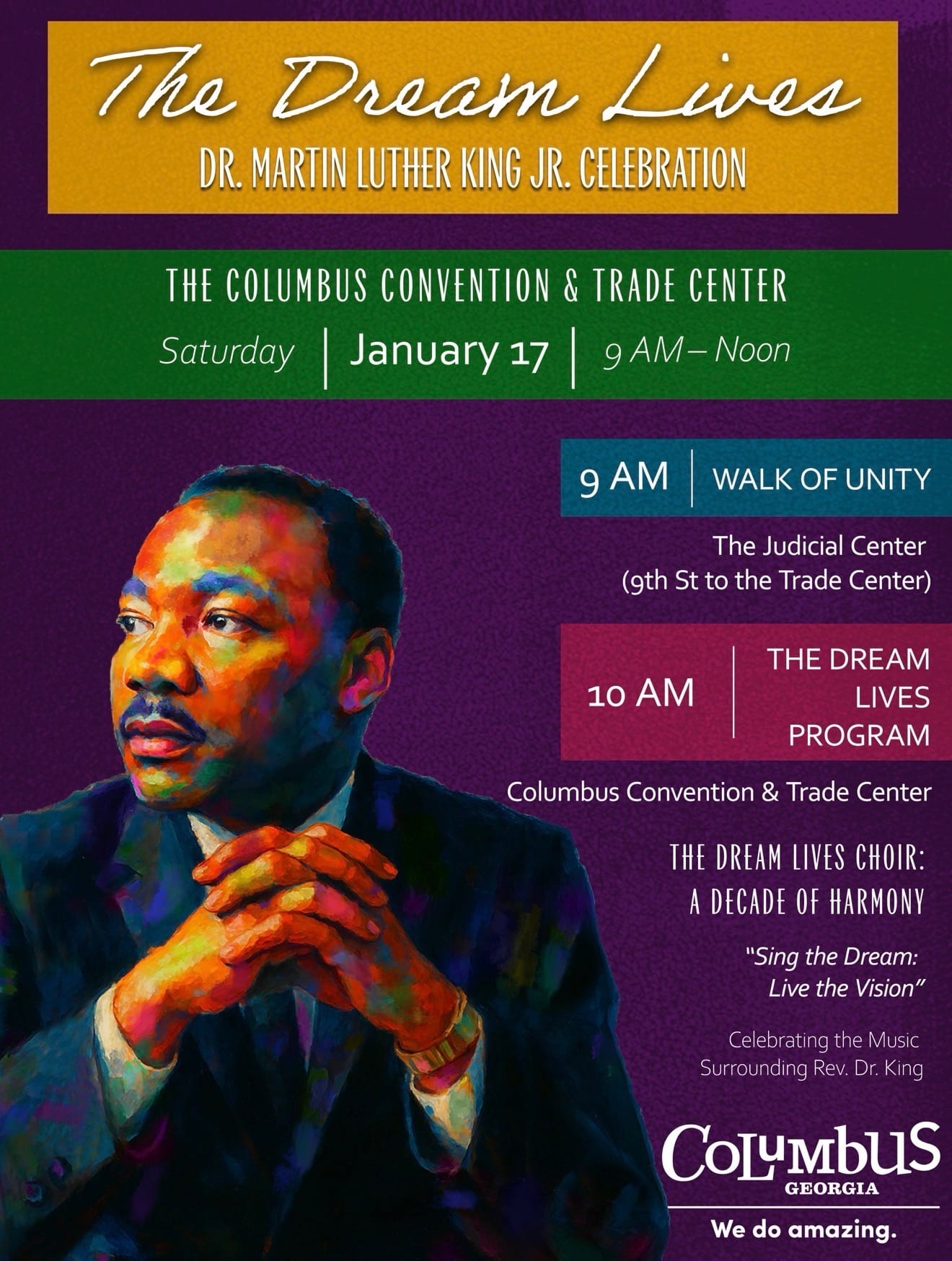
Q: The title Dream Lives is powerful and intentional. What does it mean to you personally, and how does this year’s event bring that dream to life for the Columbus community?
AZ: For me, Dream Lives means the work did not end with the dreamers who came before us. It means the promise of justice, equity, and recognition is still alive—still breathing—and still demanding action, especially through culture.
Personally, Dream Lives represents my commitment to turning ideals into institutions. In Columbus, Georgia, it reflects how I have used music and the arts not just as expression, but as tools for justice and empowerment. Through the founding of the Music and Entertainment Council, I helped create a table where voices long overlooked could finally be heard. Through MaFest, we transformed the celebration of Ma Rainey from written history into visibility, opportunity, and a vision of Columbus as a destination city honoring the Mother of the Blues. Through the Georgia Broadcasting and Music Legend Awards—alongside Senator Ed Harbison—we ensured that legacy, excellence, and contribution are honored, not erased.
Dream Lives means:
It also affirms that Dr. King’s vision is not a memory—it is a mandate. The Dream Lives Choir was created to give voice to hope, unity, love, and justice right here in Columbus. Each year, the event brings people together across differences to renew our collective commitment to fairness, dignity, and shared humanity.
Q: What is the history of this event?
AZ: The Dream Lives celebration in Columbus is part of the city’s annual Martin Luther King Jr. observance. Originally organized through the Mayor’s Commission on Unity, Diversity, and Prosperity, the effort was later redirected to the Dream Lives Committee to deepen its cultural and community-centered impact.
For many years, Columbus recognized Dr. King through various commemorations, but the city needed to carry the torch in a unified and intentional way. By 2019, Dream Lives became the title of the Unity Processional tied to MLK activities, though the roots of the observance extend well before my formal involvement in 2016. The purpose has always been clear: to honor Dr. King’s legacy while addressing modern challenges of equality, justice, and inclusion through collective participation.
Q: The Walk of Unity is a centerpiece of the morning. Why is it important for people to physically walk together as an act of remembrance and recommitment?
AZ: The Walk of Unity is more than a procession—it is a physical embodiment of solidarity and recommitment. Walking together reflects Dr. King’s philosophy that progress is strongest when pursued collectively, shoulder to shoulder.
Imagine a Columbus where people of different beliefs, ideologies, and lived experiences walk together toward at least one common goal: unity. The Walk bridges past and present, turning Dr. King’s message into lived action. It reminds us that justice is not theoretical—it is practiced through collective movement and shared responsibility.
Q: How does the Walk of Unity connect the legacy of Rev. Dr. Martin Luther King, Jr. to the present-day challenges and opportunities facing our city?
AZ: Connecting Dr. King’s legacy to today requires more than quoting his words—it demands applying his values, methods, and moral courage to our current realities.
Let me say it plainly:
If we have not examined our homes, our neighborhoods, and our own behavior—and applied Dr. King’s principles there—we may be part of the reason the challenges still exist.
Legacy without application is performance. Dr. King calls us to action, not admiration.
Q: Music played a critical role in the Civil Rights Movement. What role does music play in this year’s Dream Lives Program, and why is it still such a powerful tool for unity and healing?
AZ:Music was central to the Civil Rights Movement. It lifted spirits during marches, mourned losses, and celebrated victories. This year, as the Dream Lives Choir celebrates 10 years, music continues that sacred tradition.
Music transcends difference. It heals, unifies, and creates space for both reflection and joy. I am deeply grateful to every singer, director, and musician who helps carry this work forward.
Q: The Dream Lives Choir is one of the most anticipated elements of the event. How was the choir assembled, and what message do you hope their voices will carry to the audience?
AZ: Founded in 2016, the Dream Lives Choir celebrates ten extraordinary years of music, ministry, and impact. Created as a diverse, premier choir embodying Dr. King’s dream, the ensemble has welcomed more than 200 participants over the past decade.
The choir has been shaped by remarkable directors and musicians whose collective talent has strengthened its mission of unity and harmony. We also honor the churches that have opened their sanctuaries to this work, providing sacred space for community, song, and purpose.
Q: Many of the songs associated with Dr. King’s movement were rooted in faith, hope, and resilience. How does this musical celebration help younger generations understand the spirit of the movement beyond history books?
AZ: Music allows young people to feel the movement, not just read about it. It translates history’s emotional truth into a shared experience—one that resonates beyond textbooks and classrooms and stays with them long after the final note.
Q: Dream Lives is more than a commemorative event—it’s a call to action. What do you hope participants carry with them after the walk, the music, and the program conclude?
AZ: Dream Lives is not a commemorative moment—it is a challenge. The walk should not end with applause. Participants are called to carry the dream into their schools, workplaces, churches, and homes by living with compassion, advocating for justice, and engaging in civic life in ways that reflect Dr. King’s vision.
Q: How does this year’s program intentionally create space for diverse voices—across age, race, faith, and background—to feel included and represented?
AZ: Unity is not uniformity. This year’s program intentionally includes diverse voices across age, race, faith, and background to reflect Dr. King’s belief that dignity belongs to everyone. Inclusion ensures that every voice is heard, respected, and valued.
Q: In a time when communities often feel divided, what does unity look like in practical terms, and how does this event model that for Columbus?
AZ: Unity in practice means listening deeply, engaging respectfully, acknowledging hard truths, and working together across differences for the common good. Dream Lives models this through shared participation—walking together, singing together, and standing together. All are welcome.
Q: What role do local organizations, schools, churches, and artists play in shaping the Dream Lives experience this year?
AZ: They bring Dream Lives to life. Their leadership, talent, and energy ensure the program reflects the true diversity and strength of the Columbus community. This work is only possible because the community shows up.
Q: Dr. King often spoke about the “beloved community.” How does Dream Lives move us closer to that vision here at home?
AZ: Dr. King’s beloved community begins locally. Dream Lives moves us toward it by encouraging empathy, engagement, and shared responsibility—reminding us that justice and love must start in our own neighborhoods.
Q: For someone attending Dream Lives for the first time, what moment do you believe will resonate most deeply—and why?
AZ: For many, it is the collective walk—when the crowd moves as one toward a shared purpose. That moment captures the spirit of Dr. King’s message in motion.
Q: How has the Dream Lives program evolved over the years, and what makes the 2026 observance especially meaningful?
AZ: The Dream Lives Choir has grown from an idea into a decade of harmony. In 2026, we are not only singing the dream—we are committing to live it.
This year is especially meaningful with the presence of Dr. Ouida W. Harding, whose contribution to traditional gospel music connects generations and deepens the spiritual power of this moment.
Q: What message would you like to share directly with young people who may be searching for their place in today’s social justice and civic landscape
AZ: Your voice matters. Lead boldly, listen deeply, and do not wait for permission to act. The dream continues because of people like you. Do not wait until later—do it now.
Q: Finally, if Dr. King were standing with us on this January morning, what do you believe he would challenge Columbus to do next?
AZ: I believe Dr. King would laugh—then he would weep. He would laugh to hold back anger, and weep at how often unity is proclaimed but not practiced. He would challenge us to get up, wake up, and rise up—to love our neighbors beyond convenience and comfort.
We cannot post the dream—we must live it. Do not only volunteer within your circle. Drive across town. Meet a stranger. Unite for the greater good. Don’t just sing the song. Live it.