
OPINION | What If? And Why Can’t We?
In a community rich with talent, tradition and economic power, one question continues to rise above the rest: What if?

In a time when communities across Georgia are grappling with the devastating impact of fentanyl and opioid abuse, one local high school senior is stepping forward with purpose—and making a difference at the policy level.
Kaylah Green, a senior at G.W. Carver STEM High School, is not only raising awareness—she is helping shape policy. Her advocacy helped inspire Georgia House Resolution 1049, which designates the last Wednesday of Red Ribbon Week each October as Fentanyl and Opioid Awareness Day in Georgia.
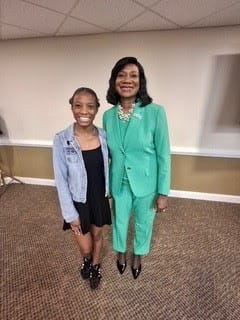
We sat down with Kaylah to talk about her mission, her courage, and why this issue matters now more than ever.
Courier: Kaylah, tell us about your service project and what sparked this mission.
Kaylah: Thank you for the opportunity. My service project is focused on fentanyl awareness and prevention. The goal was to permanently designate one day during Red Ribbon Week in October each year as Fentanyl Awareness Day.
This started during my ninth-grade year as a STEM Magnet student when I began researching the fentanyl and opioid crisis. Those years—2022 and 2023—were some of the peak years of the crisis, and the data made it real for me. I saw there was a major gap in early education and awareness, especially among young people. That’s what pushed me to act.
Courier: You didn’t stop at awareness—you helped influence policy. Walk us through that journey.
Kaylah: I started locally by meeting with our superintendent, Dr. Lewis, and presenting the idea to the Muscogee County School Board in September 2025. He agreed and committed to a permanent designation at the district level.
But I wanted to go further. I met with Carolyn Hugley, who helped submit the request for legislative review. Through advocacy, research, teamwork, and a lot of hard work, that effort led to House Resolution 1049 during the 2026 legislative session.
Now, the resolution designates the Wednesday of Red Ribbon Week each October as Fentanyl Awareness Day in Georgia, and Ed Harbison is working to advance similar efforts in the Senate.
Courier: You testified before the House Special Rules Committee. What was that experience like?
Kaylah: It was very nerve-wracking. Everything moved quickly, so I prepared notes to stay grounded. But I knew I wasn’t just representing myself—I was representing my school, the Muscogee County School District, and families who have been devastated by fentanyl poisoning.
What’s interesting is that this wasn’t my first time testifying. When I was six years old, I testified alongside my brother, Kevin Green, when he helped advocate for a bill that made the whitetail deer Georgia’s state mammal. That experience gave me an early understanding of civic engagement.
Courier: You’re also pursuing the Girl Scout Gold Award. How does this project connect to that journey?
Kaylah: I’m a lifelong Girl Scout and currently pursuing the Gold Award, which is the highest honor in scouting. This project is part of that work, but honestly, it’s bigger than any award.
Whether I receive the Gold Award or not, I’m proud of what has been accomplished. This is about helping families across Georgia and beyond. It’s about making a lasting impact through education and legislation.
Courier: Help our readers understand—what exactly makes fentanyl so dangerous?
Kaylah: Fentanyl is a prescription opioid used for pain management, but when it’s misused—or produced illegally—it becomes extremely dangerous. Street fentanyl is unregulated, unpredictable, and often mixed into other drugs without people knowing.
It’s also cheap to produce and easy to distribute, which increases its availability. Because of that, people can be exposed accidentally through cross-contamination or by purchasing medications from unregulated sources.
Courier: What did your research reveal about the impact here in our community?
Kaylah: The data is very clear—and very concerning. In Muscogee County, there have been 183 opioid-related deaths between 1999 and 2023. The highest year was 2021 with 23 deaths, and 2024 has already surpassed that with 30 deaths.
The most affected age group is 35 to 39, but what really stood out to me is that young people ages 18 to 24 account for 19 deaths—and that number continues to rise. That’s why early intervention is so critical.
Courier: You’ve worked with public health and law enforcement experts. What have you learned from them?
Kaylah: Through interviews with professionals like Sgt. Jones of the Columbus Police Department and experts from Morehouse School of Medicine, I learned that one of the main drivers of this crisis is the cheap cost and easy availability of street fentanyl.
Because it’s unregulated, it’s often produced in deadly dosages. It’s entering the country through legal ports and can end up in communities very easily. That’s why awareness and education are so important—people need to understand how dangerous and unpredictable it is
Courier: Your project focuses heavily on education. What does that look like in action?
Kaylah: This is a public health education and advocacy campaign centered around Red Ribbon Week. We’re targeting students from Pre-K through 12th grade, because I believe starting early creates the biggest impact.
We’ve developed student-led videos, educational materials, and school-based discussions supported by counselors and educators. We’re also working to integrate this into school systems so it becomes part of the culture—not just a one-time conversation.
Courier: How are you ensuring this work continues beyond your involvement?
Kaylah: Sustainability has been a major focus. By working with the school district and state legislators, we’re pushing for permanent policies—either through school board mandates or legislative action—that will require fentanyl awareness education every year.
That way, this effort continues automatically. It’s not dependent on me or any one person—it becomes part of the system.
Courier: You’ve shown measurable goals and outcomes. What impact do you expect this project to have?
Kaylah: We’re measuring impact through participation—how many schools are involved, how many students are reached—and through knowledge checks before and after the program.
All of the project goals have been accomplished: securing district support, creating student-led educational content, partnering with health and law enforcement agencies, and advancing statewide legislation.
Courier: What have you learned about leadership through this process?
Kaylah: I’ve learned how to build a team, work with experts, manage schedules, and lead my peers. My Girl Scout experience really helped prepare me for this.
But most importantly, I learned that leadership is about taking initiative—especially when something matters. This crisis is too important to ignore.
Courier: Final question—what message do you want to leave with the community?
Kaylah: My target audience is students—because if we start early, we can make the biggest impact.
Education is power. When young people understand the dangers, we can change the future. This crisis is bigger than me, bigger than you, and bigger than any one organization. But together, we can make awareness go viral—and prevention permanent.
The data tells us we cannot wait. We must act now—students, parents, educators, and community leaders—to build a culture of awareness and prevention.
Editor’s Note:
Kaylah Green’s work positions Columbus and Muscogee County as leaders in addressing the opioid crisis through education, advocacy, and policy. Her efforts serve as a model for communities across Georgia—and the nation—on how to turn awareness into action.