
Men’s Progressive Club Honors Shevon Thomas, Awards Scholarships at Annual Banquet
By Staff Writer The Men’s Progressive Club of Columbus, Inc. held its annual Man of the Year Banquet and


At some point, Americans must stop asking whether something feels wrong and start asking whether it is wrong.
The recent arrests of journalist Don Lemon, Minnesota reporter Georgia Fort, and activists Jamael Lydell Lundy and Trahern Jeen Crews should concern anyone who values a free press—but especially Black Americans who understand how state power has historically been used against dissent.
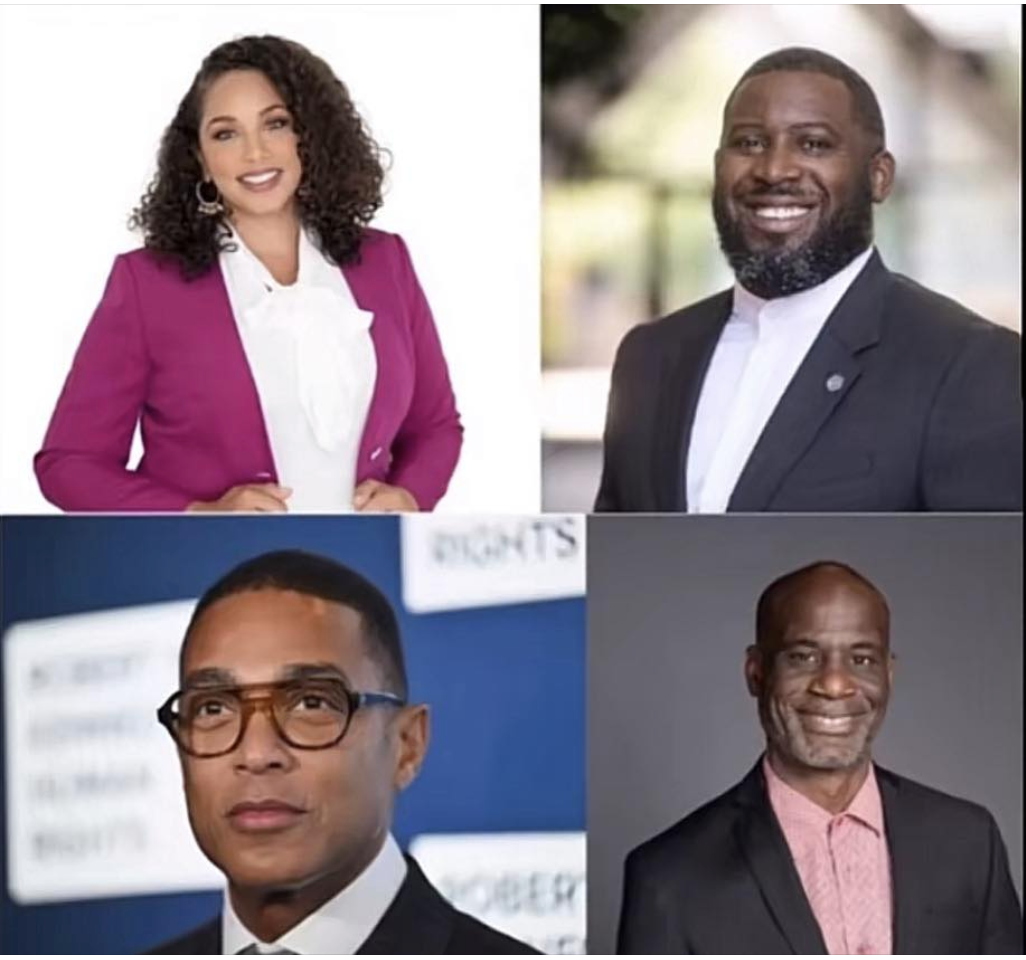
The four were arrested Jan. 30 following a protest earlier this month at Cities Church in St. Paul, where demonstrators disrupted a worship service to call attention to immigration enforcement and the role of a church leader who also serves as a senior ICE official. Federal prosecutors charged them with conspiracy and interfering with religious freedom, invoking the Freedom of Access to Clinic Entrances (FACE) Act—legislation originally designed to protect abortion providers.
That alone should raise eyebrows.
Lemon and Fort maintain they were present in a journalistic capacity—documenting, livestreaming, and reporting on a public protest. Lemon, released after his initial court appearance, was defiant: “I will not be silenced.” Fort livestreamed her own arrest, calmly asserting her role as a reporter. The National Association of Black Journalists quickly condemned the arrests, warning that criminalizing journalism under the guise of law enforcement threatens press freedom itself.
Here’s the question many are asking quietly but deserve to ask out loud: Was this simply overzealous prosecution—or something more calculated?
We are living in a moment where calls to invoke the Insurrection Act are no longer hypothetical. Former President Donald Trump has openly floated using federal troops to suppress protests and civil unrest. History shows that the fastest way to justify such extraordinary measures is to manufacture—or provoke—disorder. Black protest has long been treated not as civic expression, but as a threat to be neutralized.
No one is alleging, nor should anyone casually assert, that these arrests were part of an explicit plot to incite riots. But it is entirely reasonable—and necessary—to examine whether aggressive federal action against Black journalists could inflame tensions, chill coverage, and create the very instability used later to justify authoritarian responses.
This is not paranoia. It is historical memory.
From the historical surveillance of civil rights leaders, Black voices challenging state power have often been met with disproportionate force. Arresting journalists—especially Black journalists—at protests sends a message that coverage itself can be criminalized if it makes the powerful uncomfortable.
And let’s be clear: journalists do not riot. They record. They bear witness. They preserve the public record when institutions would prefer silence.
Prosecutors argue that Lemon’s actions crossed the line from reporting to participation. But that distinction must be proven carefully and transparently, because the consequences of getting it wrong are enormous. If livestreaming a protest becomes conspiracy, then the First Amendment is no longer a shield—it’s a suggestion.
The chilling effect is already here. Reporters are asking whether showing up with a camera could now lead to handcuffs. Communities are asking whether telling their own stories is worth the risk. That is not public safety. That is intimidation.
Courier Eco Latino serves communities that know too well what happens when scrutiny disappears and unchecked power fills the vacuum. A free press—especially a diverse one—is not a nuisance to democracy. It is its early warning system.
If journalists can be detained for covering protest today, tomorrow it will be voters, organizers, and pastors. Democracy does not collapse all at once. It erodes—quietly, legally, and always “for our own good.”
That is why these arrests must be examined closely, challenged vigorously, and debated publicly. Not because we assume conspiracy—but because we refuse complacency.
History has taught us what happens when we don’t ask hard questions soon enough.