
News
CEL News: Sunday Edition
After a Lifetime of Service, Jesse Jackson Denied Capitol Lie-in-State Honor READ MORE Celebrating 28 Days of Black Excellence. Past


At its core, democracy is simple: the people should choose who represents them. Yet in Columbus, when a vacancy occurs on City Council, that choice does not automatically rest with the voters. Instead, the council may appoint a replacement — sometimes for as long as two years — without a special election and without direct input from the citizens most affected by the decision.
That is precisely why new local legislation has been introduced to correct what many residents see as a flaw in the current system.

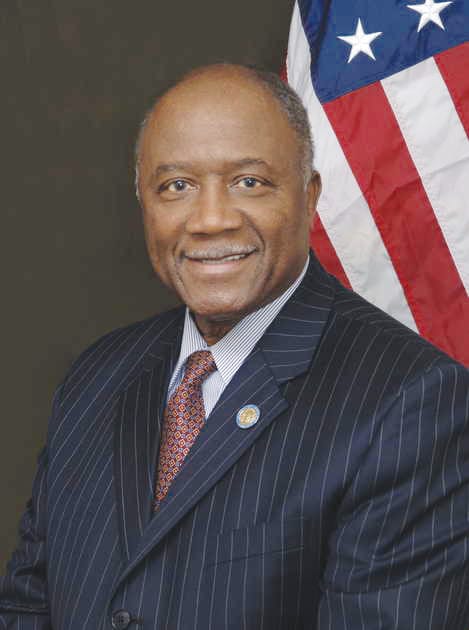
State Representative/House Minority Leader, Carolyn Hugley





State Representative Debbie Buckner; State Representative Teddy Reese; State Representative, Carmen Rice; State Representative, Vance Smith; State Senator, Randy Robertson; and State Senator, Ed Harbison
The Issue at Hand
Under the existing interpretation of Columbus’ charter, when a vacancy occurs, the replacement can serve until the next regular municipal election — even if that election is years away. In practical terms, that means an appointed council member could serve nearly a full term without ever appearing on a ballot.
Two years is not a “temporary” appointment in the eyes of most citizens.
The proposed legislation offers a straightforward solution:
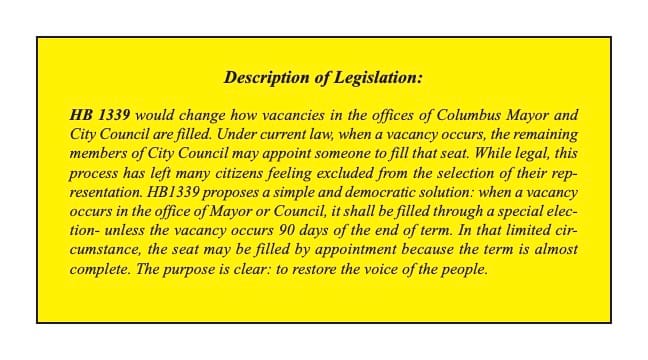
There is nothing complex about this proposal. It does not strip authority from council. It simply ensures that long-term representation flows from the ballot box, not from a closed-room vote.
Democracy Should Not Be Controversial
Supporters of the measure argue that the principle is basic: when the term remaining is substantial, voters should decide who fills it.
Opposition has surfaced, with some arguing that such changes should wait for a future charter review. Others contend that the council should retain full control over local legislative matters affecting its structure.
But local legislative authority ultimately rests with the General Assembly — and more importantly, with the people those lawmakers serve.
Legislators who have signed on to the proposal maintain they have both the authority and the responsibility to respond to constituent concerns. And many constituents have expressed dissatisfaction with how vacancies are currently filled.
A Broader Concern
The implications extend beyond council seats.
Under current rules, if a mayoral vacancy were to occur, the remaining council members could appoint a new mayor — again without a citywide vote. In previous eras, informal agreements discouraged appointed officials from immediately running to retain those seats. Today, no such guardrails exist.
Other cities provide notice of vacancies, accept applications publicly, establish criteria, and in many cases call special elections. Transparency and voter participation are not radical ideas; they are foundational democratic practices.
Let the Voters Speak
The legislation has been introduced. Like any bill, it must move through the legislative process. Supporters acknowledge there is opposition, and that the measure’s success will depend in part on whether citizens make their voices heard.
Residents who believe voters should determine long-term representation are encouraged to contact members of the local legislative delegation and express their support.

This is not about personalities. It is not about political factions. It is about a simple question:
Should the people choose their representatives when vacancies last for years?
Democracy works best when participation is expanded, not limited. If Columbus believes in representative government, then allowing citizens to vote in extended vacancies should not be feared.
It should be embraced. Because in the end, public office does not belong to council members.
It belongs to the people.