
A View from a Pew: Stop Begging. Start Building.
From where I sit — from this pew — history keeps whispering a lesson we don’t always want to hear: You


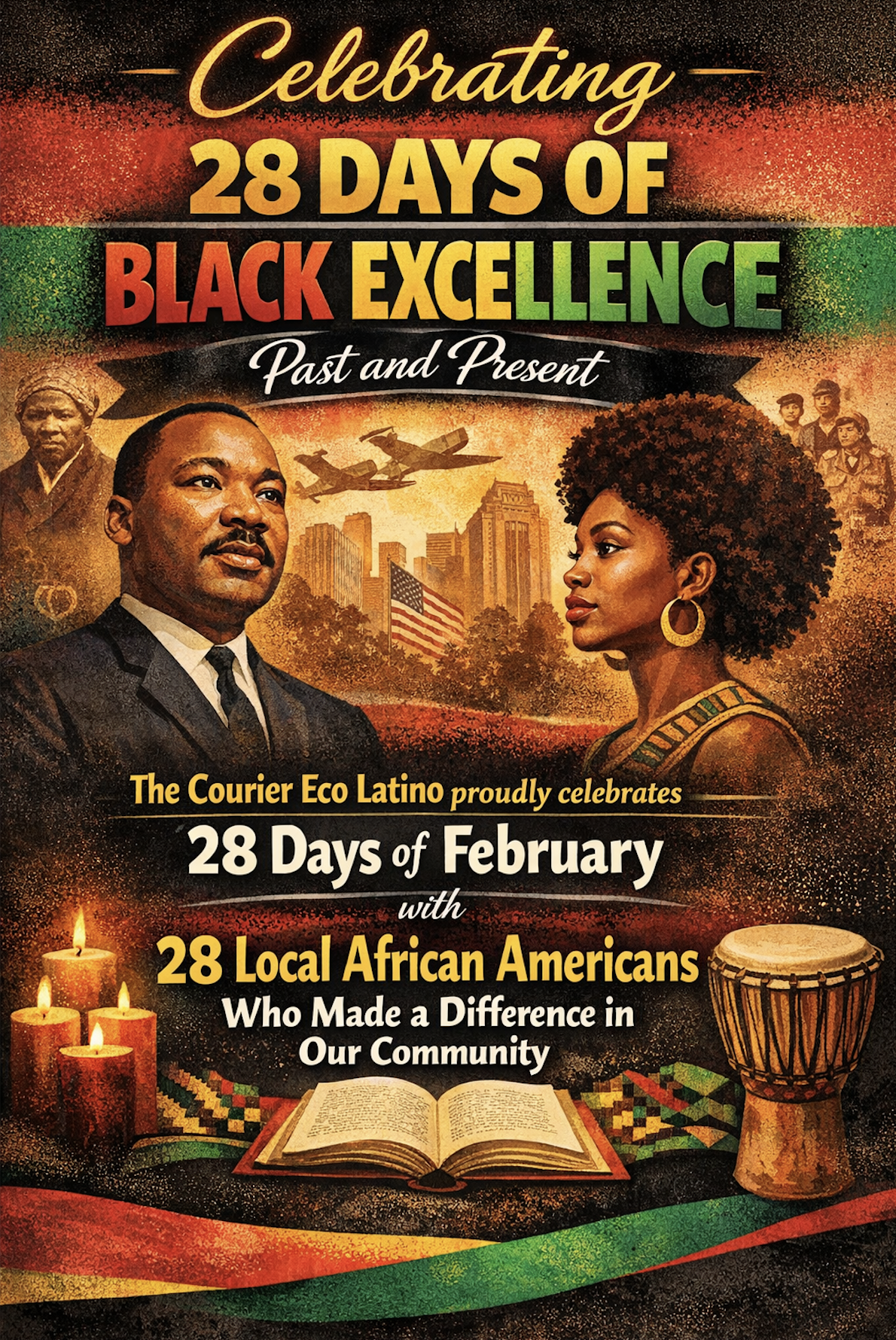
Throughout the month of February, The Courier Eco Latino honors Black
History Month by spotlighting one local African American leader—past or
present—each day. The series features trailblazers, educators, entrepreneurs,
artists, advocates, and unsung heroes whose contributions have helped shape the
soul, strength, and future of our community.
These are stories that may not always make headlines, but make a difference every day. From classrooms to boardrooms, from pulpits to protest lines, from small businesses to grassroots movements, each honoree reflects resilience, leadership, and service rooted right here at home.
Margaret Belcher, a pioneering businesswoman and civil rights leader, helped shape Columbus’ economic and social landscape during a pivotal era of change. Through entrepreneurship and advocacy, she left a legacy that bridged commerce and community at a time when both required courage.
Born in Dallas, Georgia, in 1923, Belcher moved to Columbus in 1961 after marrying Ralph Belcher, a local barber. With a keen interest in numbers and a drive for independence, she pursued formal training at Carpenter’s Business School in Columbus and later earned a degree in bookkeeping from the LaSalle School of Accounting in Chicago.
In 1965, Belcher established her own bookkeeping and tax consulting firm, operating out of the back of her husband’s barber shop. At a time when women — particularly Black women — faced significant barriers in business, her firm was one of the first in Columbus to be operated solely by a woman. Clients trusted her precision, professionalism and discretion, and her enterprise quickly became a model of determination and self-reliance.
But Belcher’s influence extended far beyond balance sheets.
During the turbulent 1960s, she emerged as a leading figure in the local civil and human rights movement. She worked to promote peaceful desegregation of public facilities and fair employment practices in Columbus, advocating negotiation over confrontation. Following the fire bombings of the summer of 1971, then-Mayor J.R. Allen convened a biracial committee of civic leaders to address rising tensions and economic disparities. Belcher served alongside community leaders, including Bill Turner, Nolan Murrah, Rudy Allen and George Ford, representing the concerns of the Black community as a leader within the NAACP.
The committee focused on economic solutions, emphasizing jobs, access and opportunity. As with earlier civil rights challenges in Columbus, progress came through dialogue and negotiation — a strategy Belcher strongly supported.
On Sept. 28, 1972, African American and white leaders formally established a local chapter of the Urban League, dedicated to advancing employment, health care, education and housing opportunities for Black residents. Belcher was a founding member, reinforcing her belief that economic empowerment was central to equality.
Her civic engagement was broad and sustained. She was active in the NAACP, the Metropolitan Urban League, the YMCA, Goodwill Industries, the Columbus-Phenix City Club of Negro Business and Professional Women’s Clubs Inc., Friendship Baptist Church, the Modern Free and Accepted Masons of the World and several mayoral commissions. In each role, she advocated for opportunity, dignity and inclusion.
Belcher died in 2002, but her impact remains woven into the fabric of Columbus. As both an entrepreneur and an advocate, she demonstrated that economic independence and civil rights advancement were not separate pursuits, but complementary ones.
In business, she balanced the books. In the community, she helped balance the scales.