
Polling Location Changes Announced Ahead of May 2026 Election
As Muscogee County prepares for the May 2026 municipal elections, voters are encouraged to review their assigned polling locations following


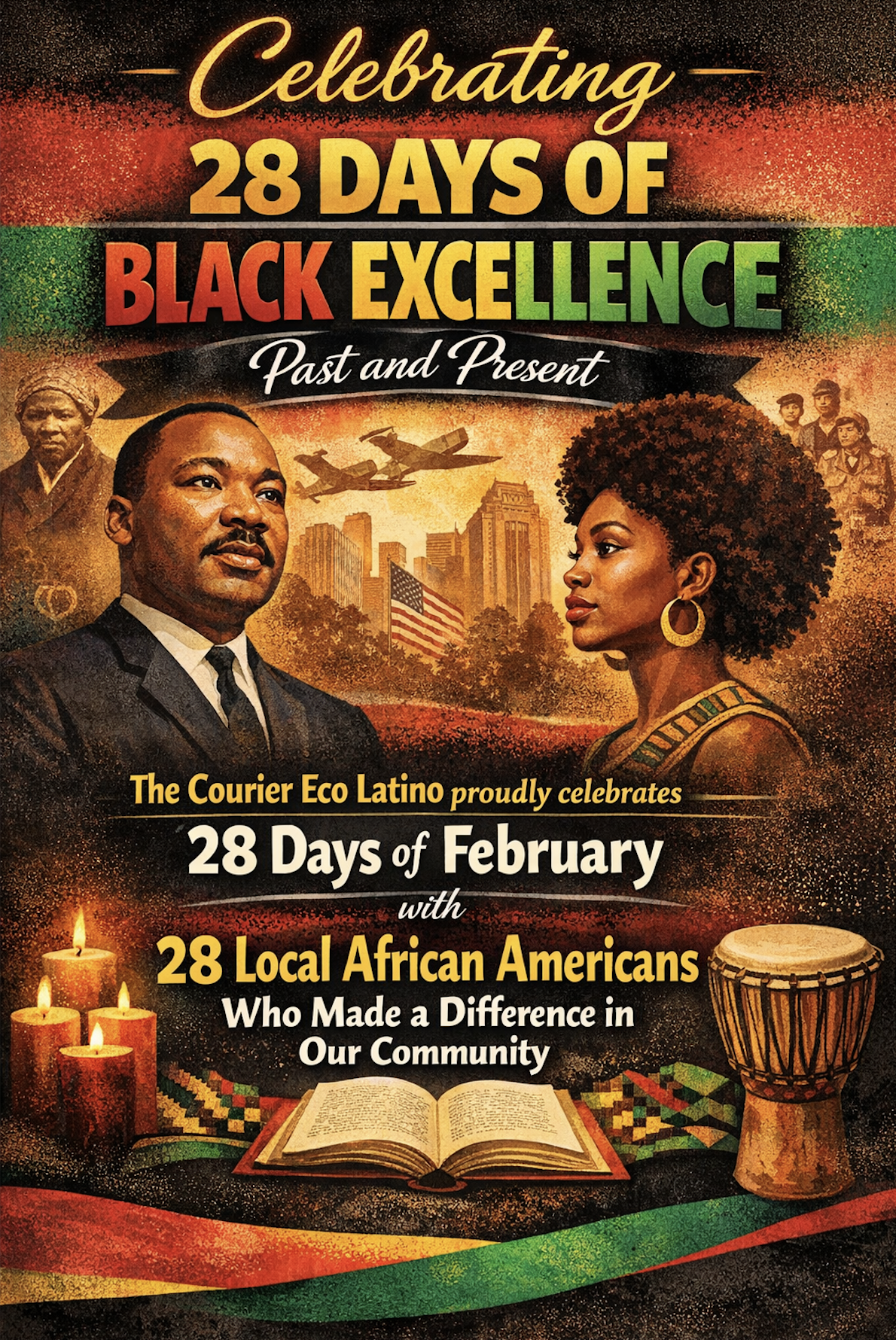
Throughout the month of February, The Courier Eco Latino honors Black History Month by spotlighting local African American leaders or organizations—past or present—each day. The series features trailblazers, educators, entrepreneurs, artists, advocates, and unsung heroes whose contributions have helped shape the soul, strength, and future of our community.
These are stories that may not always make headlines, but make a difference every day. From classrooms to boardrooms, from pulpits to protest lines, from small businesses to grassroots movements, each honoree reflects resilience, leadership, and service rooted right here at home.
Long before the language of community development, economic empowerment and civil rights leadership became common in public discourse, Lizzie Mae Lunsford was quietly building all three in Columbus’ historic Black neighborhoods.
A businesswoman, philanthropist and civic leader whose influence helped shape the Liberty District and the area once known as “The Bottom,” Lunsford stands today as one of Columbus’ most significant — yet often understated — Black icons.
Together with her husband, Watson T. Lunsford, she operated a neighborhood grocery store at the foot of Wynn’s Hill near what is now Martin Luther King Jr. Boulevard. The store became more than a place to buy food; it was a lifeline for families navigating the hardships of segregation-era Columbus. Customers often received more than what they paid for — sometimes literally.
If neighbors lacked money for groceries, the Lunsfords allowed them to bring vegetables grown in their own gardens to sell through the store. Credit was extended when needed, dignity preserved whenever possible. Those quiet acts of generosity became foundational to the couple’s reputation. “They understood community before it became a slogan,” local historians have noted of the family’s legacy.
Building the Liberty District
Lunsford’s impact expanded dramatically through her family’s business ventures. Her brother, Richard Pierce, constructed the three-story Pierce Building around 1920 at Ninth Street and Fifth Avenue — an intersection later known as “Magic Corner.” The development transformed Ninth Street into a thriving Black commercial corridor during segregation. After Pierce’s death in 1934, Lunsford assumed responsibility for managing the building and its operations.
The structure quickly became a centerpiece of Black economic life in Columbus. The first floor housed a drugstore, restaurant and barber shop. Professional offices and retail businesses occupied the second floor, while the third-floor auditorium served as a gathering space for community events.
During World War II, the building also functioned as the primary bus depot serving soldiers stationed at nearby Fort Benning, including members of the segregated 24th Infantry Regiment.
The Lunsford family’s entrepreneurial spirit extended into future generations. Their son, Walter Lunsford, founded one of Columbus’ first Black taxi companies while also operating Fox Deluxe Wholesale Beer Distributing Company and the Pierce Amusement Company. For the Lunsfords, business success was inseparable from community responsibility.
A Home That Became a Haven
In 1941, the Lunsfords began construction on a stately Georgian Colonial Revival home occupying nearly an entire city block on Lawyers Lane. Built by contractor J.D. Stillwell using the finest materials of the era, the residence reflected both achievement and aspiration during a time when opportunities for African Americans were sharply restricted.
Watson Lunsford died before the home was completed, leaving Lizzie Mae to finish the project while continuing the family’s expanding civic commitments.
The home soon became far more than a private residence. During the Jim Crow era, African Americans traveling through the South had few safe or respectable places to dine, meet or stay overnight. Recognizing that need, Lunsford opened her home to visiting leaders, entertainers and athletes.
Among those welcomed there were educator and stateswoman Mary McLeod Bethune, baseball legends Jackie Robinson and Roy Campanella, jazz icon Louis Armstrong, Morehouse College President Dr. Benjamin Mays, and Columbus civil rights leader Dr. Thomas H. Brewer.
To accommodate growing civic and social gatherings, a separate structure known as “the playhouse” was built on the property. It hosted meetings and events for organizations including The Links, Inc., Delta Sigma Theta Sorority Inc., Jack and Jill of America Inc., and Junior Matrons. In 1948, Delta Sigma Theta chartered its local chapter there.
Answering the Call During War
Perhaps Lunsford’s most extraordinary act of philanthropy came during World War II. As Fort Benning expanded, thousands of Black soldiers stationed there lacked adequate recreational or social facilities because of segregation. At the request of YMCA official E.E. Farley, Lunsford personally donated $15,000 — an enormous sum at the time — to construct what became the nation’s first Army and Navy YMCA/USO facility for African American soldiers.
Located on Fifth Avenue near the Pierce Building, the facility included libraries, social rooms, canteens and recreational spaces serving more than 5,000 Black troops. Groundbreaking ceremonies drew hundreds of soldiers from the 24th Infantry Regiment along with military leaders, clergy and civic officials from across the region. The building was dedicated in July 1941 and quickly became a vital “home away from home” for servicemen facing both war abroad and segregation at home.
Standing for Voting Rights
Lunsford’s commitment extended beyond philanthropy into direct civil rights activism. In 1945, when Columbus minister Primus King challenged Georgia’s all-white Democratic primary system after being denied the right to vote, Lunsford helped support the legal effort that ultimately led to a federal ruling ending the discriminatory practice.
Her involvement came at personal risk. Crosses were burned in her yard, and threats were made against her family in an effort to force her to leave Columbus. Instead, she remained. Family members later recalled that allies — including wives of prominent white civic leaders — helped ensure protection for the Lunsford family during the tense period. Despite intimidation from the Ku Klux Klan and growing racial tensions, Lunsford continued her work.
A Legacy Built Quietly
Throughout the 1940s and beyond, Lunsford repeatedly stepped forward when the Black community faced urgent needs. She financed housing developments during wartime shortages, supported cultural and athletic events such as the Tuskegee-Morehouse football game, and invested in businesses that strengthened Black economic independence.
Yet recognition was never her goal. Those who knew her say she acted simply because the community required it. When soldiers needed a YMCA, she wrote a check. When voting rights were challenged, she showed up in court. When families needed opportunity, she helped build it.
Today, historians credit Lizzie Mae Lunsford and her family with helping transform Columbus’ Black neighborhoods into centers of commerce, culture and resilience during one of the most difficult periods in American history.
Her legacy remains a testament to a simple principle she lived by: building family, strengthening community and opening doors for those who would come next.